
Why Mid-Market IT Teams Are Burning Out and How Automation Changes the Equation
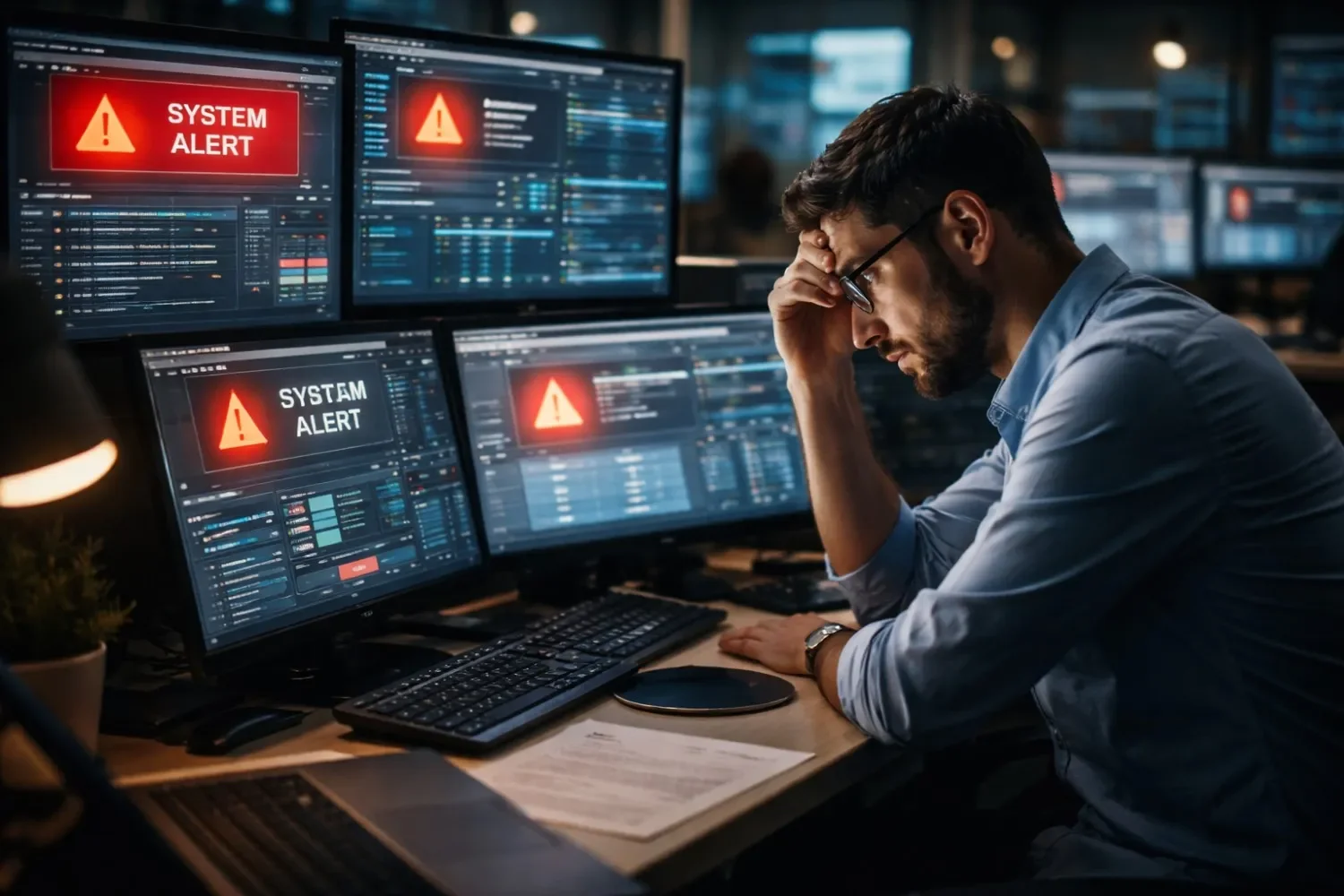
Burnout is a system design problem, not a personal failure
Share This Story, Choose Your Platform!
IT burnout in mid-sized organizations is no longer anecdotal. It is structural.
Teams supporting 100 to 1000 users are expected to deliver enterprise-grade reliability, security, and responsiveness without enterprise-level staffing or tooling. The outcome is predictable. Constant firefighting. Stalled initiatives. Rising attrition. Fragile morale.
This is not a problem solved with resilience training or advice to work smarter. It is the result of environments that require human intervention where machines should already be doing the work.
Automation and AI are not luxuries in this context. They are corrective forces.
Why Burnout Is Accelerating in the Mid-Market
Mid-market IT leaders face a uniquely punishing combination of pressures:
Hybrid infrastructure spanning on-prem, cloud, and SaaS
Expanding security surface area
Continuous vendor updates and breaking changes
Compliance obligations without dedicated compliance teams
User expectations shaped by consumer-grade technology
Chronic understaffing
Every new system adds operational weight. Every alert demands attention. Every manual task quietly consumes cognitive bandwidth.
Burnout does not emerge from poor performance or weak work ethic. It emerges from unsustainable system design.
The Hidden Cost of Manual Operations
Manual IT operations compound harm in three predictable ways.
Cognitive Drain
Humans are poor at repetitive vigilance. Reviewing logs, chasing alerts, and applying routine changes erode focus and increase error rates over time.
Reactive Posture
When teams are buried in tickets, planning disappears. Strategy collapses into survival mode. Innovation stalls.
Fragile Knowledge
Manual environments rely on tribal knowledge. When a key engineer leaves, stability often leaves with them.
Burnout is the symptom. Manual operations are the disease.
Where Automation Actually Makes a Difference
Automation does not mean placing AI everywhere. It means removing human effort from work that never required judgment in the first place.
High-Impact Automation Zones
Service Desk
Auto-resolution of common tickets
Intelligent routing and prioritization
Copilot-assisted response drafting
Infrastructure and Network Operations
Automated patching and configuration drift correction
Predictive alerting instead of threshold noise
SD-WAN self-healing and failover
Security Operations
Automated containment of known threat patterns
Identity-based access enforcement
Continuous security posture assessment
User Lifecycle Management
Joiner, mover, and leaver automation
License assignment and reclamation
Policy-based access control
Each automated process removes friction, reduces error, and restores time.
Why Automation Fails Without Structure
Many organizations attempt automation and abandon it. The reasons are consistent:
Tools deployed without workflow redesign
Automation layered onto broken processes
No ownership or governance
Script-based automation without monitoring
AI introduced without training or guardrails
Automation amplifies whatever system it touches. If the system is chaotic, automation accelerates chaos.
How Nexigen Changes the Outcome
Nexigen approaches automation as an operational discipline, not a collection of tools.
Process First
We map workflows before automating them. If a process does not deserve to exist, we eliminate it.
Tool Alignment
We leverage Microsoft Copilot, Azure automation, Fortinet telemetry, and AIOps platforms only where they fit operationally.
Human-Centered Design
Automation is built to support IT teams, not obscure systems or remove agency.
Operational Integration
Automation ties directly into Nexigen’s NOC and SOC, ensuring visibility and accountability.
Measurable Outcomes
Clients consistently report:
Lower ticket volumes
Faster resolution times
Improved SLA adherence
Reduced after-hours workload
Higher staff retention
Burnout declines because the environment stops demanding constant heroics.
What Mid-Market Leaders Should Do Now
If your IT team feels stretched, ask three questions:
Which tasks are still manual that should not be
Which alerts require human attention but rarely lead to action
Where critical knowledge lives only in someone’s head
Those answers define your automation roadmap.
Conclusion
Burnout is not solved with better attitudes or longer hours. It is solved by redesigning systems so humans do what humans are good at and machines do the rest.
Automation, AI, and managed operations are about sustainability, not efficiency alone.
Nexigen helps mid-market organizations build environments that work with their teams instead of against them.
Get Started Now
Ready to integrate Nexigen into your IT and cybersecurity framework?
Schedule a 30-minute consultation with our expert team
Breathe. You’ve got IT under control.
Ready to integrate Nexigen into your IT and cybersecurity framework?
Refine services and add-ons to finalize your predictable, no-waste plan
Complete the form below, and we’ll be in touch to schedule a free assessment.
Ready to Take the Next Step? Let’s Talk
Have questions or want to learn more about how we can help your business? Fill out the form below and a member of our expert team will reach out shortly.