
Modernizing Manufacturing Operations: Your Guide To Digital Transformation
Share This Story, Choose Your Platform!
Quick Summary
Digital transformation in manufacturing connects machines, data, and people through IoT sensors, cloud platforms, and automation software that replace manual, paper-based processes. Plants that adopt these tools gain real-time visibility into production, fewer unplanned outages, and lower operating costs over time. Success depends less on buying every new tool and more on picking technology that solves a specific, measurable problem on the floor.
Manufacturers across the country are under pressure to do more with less, and digital transformation in manufacturing has become the main path forward for plants that want to stay competitive. Rising labor costs, tighter margins, and constant supply chain disruptions push operators to rethink processes that have stayed the same for decades.
Instead of adding headcount or working longer shifts, many plants turn to connected sensors, automation, and data software to close the gap. This shift touches everything from the shop floor to the supply chain, and understanding where to start makes the difference between a smooth rollout and a stalled project.
What Digital Transformation Means for Manufacturers
Digital transformation means connecting physical equipment, data, and people so decisions get made with current information instead of guesswork. A machine that once ran until it broke now reports its own wear patterns. A supervisor who once walked the floor to check output now sees production numbers update on a screen in real time.
This shift moves operations from reactive, fixing problems after they happen, to proactive, catching issues before they cause downtime. It also changes how teams work together, since data becomes shared across departments instead of sitting in separate systems. Maintenance, quality, and production planning start pulling from the same numbers, which cuts down on the back-and-forth that slows decisions when everyone works from a different set of reports.
Core Technologies Driving the Shift
Several technologies work together to make this transformation possible. Internet-connected sensors attach to machines and collect data on temperature, vibration, and output without added manual work. Manufacturing execution systems and enterprise resource planning software tie production data to scheduling, inventory, and finance, so departments stop working off separate spreadsheets.
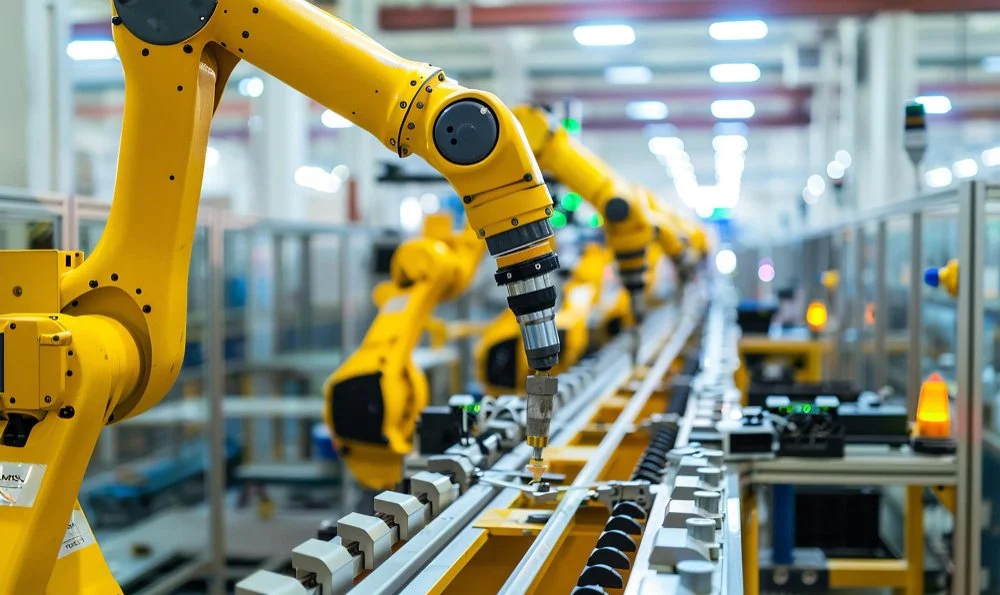
Cloud platforms store and process this data at a scale local servers cannot match, while giving remote access to managers across multiple plants. Artificial intelligence and analytics tools sort through the data to flag patterns, like early signs of equipment wear, that a human might miss. Robotics and automation handle repetitive tasks, freeing staff for work that needs judgment and skill.
Why the Manufacturing Industry Is Racing to Modernize
The push behind digital transformation in the manufacturing industry comes from a mix of pressures hitting plants at once. Labor shortages make it harder to fill skilled positions, pushing companies toward automation for tasks that once needed a full shift of workers. Global competition means a plant in one region competes directly with lower-cost operations overseas, and efficiency gains from technology help close that gap.
Customers now expect faster delivery and more product customization, both of which need flexible, data-driven production lines. Add in rising energy costs and sustainability reporting requirements, and the case for modernizing becomes hard to ignore.
What This Looks Like on the Floor
Looking at real digital transformation examples in manufacturing helps make the concept concrete instead of abstract. A few common applications include:
Predictive maintenance: sensors flag unusual vibration or heat in a machine days before it fails, letting teams schedule repairs instead of dealing with surprise downtime.
Digital twins: a virtual copy of a production line lets engineers test changes in software before touching physical equipment.
Automated quality inspection: cameras and computer vision catch defects faster and more consistently than a manual visual check.
Real-time inventory tracking: RFID tags and connected scanners update stock counts the moment materials move, cutting down on manual counts and shortages.
These examples share a common thread: each one replaces a manual, error-prone task with a system that works faster and catches problems earlier.
Common Roadblocks During the Transition
Modernizing seldom goes perfectly smoothly, and knowing the common obstacles ahead of time helps plants plan around them. Legacy equipment built decades ago often lacks the connectivity needed for modern sensors, requiring added hardware or full replacement. Workforce skills gaps show up when staff need training on new software and systems, which takes time away from production.
Cybersecurity risk grows as more machines connect to networks, since each connected device becomes a possible entry point for an attack. Budget constraints also play a role, since digital transformation projects often need upfront spending before any savings show up on the books. Resistance to change from staff who are comfortable with existing routines adds another layer, and plants that skip clear communication about why a change is happening often see slower adoption on the floor.
How to Start Your Digital Transformation Journey
A successful rollout usually follows a similar path, regardless of plant size or industry:
Assess your current systems and identify where manual processes cause the most delays or errors.
Pick one pilot project with a clear, measurable goal, rather than trying to modernize everything at once.
Bring floor staff into the planning process early, since their input catches practical problems a spreadsheet cannot.
Build cybersecurity into the plan from day one, not as an afterthought once systems are already connected.
Choose a technology partner who understands both the software side and the physical operations side of manufacturing.
Starting small and proving value on one line makes it easier to get buy-in and budget for the next phase.
Modernize Your Manufacturing Operations with Nexigen
At Nexigen, we work with manufacturers to plan and support digital transformation projects that fit real production goals, not just trends. Our team pairs cloud infrastructure, network security, and AI-driven tools under one roof, so plants get a single point of contact instead of managing several vendors.
With over 20 years of experience supporting businesses across Kentucky and the tri-state area, we know how to scope a rollout that delivers measurable results without disrupting daily operations. Reach out to Nexigen and start building a modernization plan built around your plant.
FAQs
-
Most plants start by assessing current systems to find where manual processes cause the most delays, then pick one pilot project to prove value.
-
Timelines vary by scope, but a focused pilot project often takes three to six months, while plant-wide rollouts can span a year or more.
-
No. Small and mid-size manufacturers can start with a single sensor or software upgrade and scale up as budget and results allow.
Ready to Take the Next Step? Let’s Talk
Have questions or want to learn more about how we can help your business? Fill out the form below and a member of our expert team will reach out shortly.